When most people think about orthodontic treatment, they picture straightening crooked or crowded teeth to create a beautiful, aligned smile. While achieving straight teeth is certainly an important goal, orthodontics accomplishes much more than cosmetic improvement. At Jarosz & Valente Orthodontics, serving Arlington Heights and Deerfield, we focus on the complete picture of your oral health—and that includes correcting your bite.
Your bite, also called occlusion, refers to how your upper and lower teeth come together when you close your mouth. A properly aligned bite is essential not just for appearance, but for your long-term dental health, jaw function, and overall comfort. Let’s explore the different types of bite problems orthodontics can address and why correction matters so much.
Understanding Common Bite Problems
Overbite occurs when your upper front teeth overlap your lower front teeth excessively. While a slight overbite is normal, a deep overbite can cause the lower teeth to bite into the roof of your mouth, leading to tissue damage, excessive wear on the front teeth, and jaw discomfort. In severe cases, an overbite can affect facial appearance and contribute to TMJ issues.
Underbite is the opposite problem—your lower teeth extend beyond your upper teeth when biting down. This misalignment can make chewing difficult, cause uneven tooth wear, and strain the jaw joints. Underbites often result from lower jaw overgrowth, upper jaw undergrowth, or a combination of both skeletal and dental factors.
Crossbite happens when some of your upper teeth sit inside your lower teeth rather than outside them when you bite down. This can occur in the front or back of the mouth. Crossbites can cause uneven tooth wear, gum recession, asymmetrical jaw development in growing children, and facial asymmetry if left untreated.
Open bite describes a condition where your upper and lower teeth don’t touch when your mouth is closed, leaving a gap. This typically affects the front teeth but can occur in the back as well. Open bites make it difficult to bite into foods properly and can contribute to speech issues, tongue thrust habits, and excessive wear on the teeth that do make contact.
Why Bite Correction Matters for Your Health
Beyond creating an attractive smile, correcting bite problems protects your oral health in numerous ways. Proper bite alignment distributes chewing forces evenly across all your teeth, preventing excessive wear and tear on specific teeth that would otherwise bear too much pressure.
When your bite is misaligned, your jaw muscles often compensate by working harder or in unnatural positions. Over time, this can lead to chronic jaw pain, headaches, neck tension, and temporomandibular joint (TMJ) disorders. Correcting your bite allows your jaw to function as it should, reducing strain and discomfort.
Bite issues can also contribute to gum problems. When teeth don’t fit together properly, it’s harder to keep them clean, increasing your risk for cavities and gum disease. Teeth that experience uneven pressure are also more susceptible to chipping, cracking, and premature wear that can require extensive dental work later in life.
How Orthodontics Addresses Bite Problems
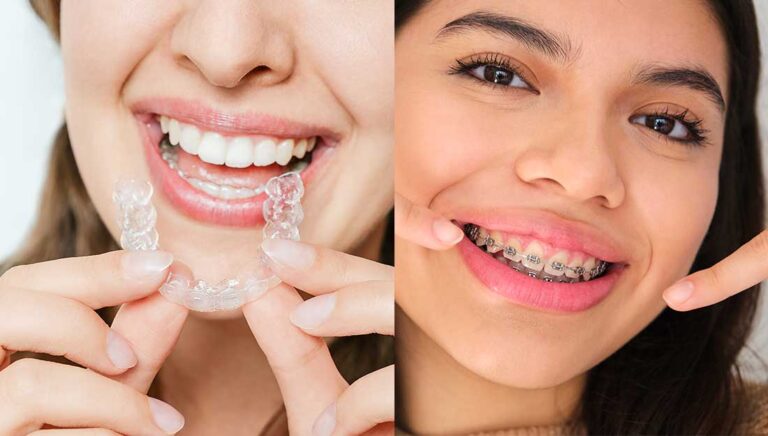
Modern orthodontic treatment offers multiple approaches to bite correction. Traditional braces remain highly effective for addressing complex bite issues, using brackets, wires, and elastics to gradually move teeth and align the jaw relationship. The precision of braces makes them ideal for severe bite problems.
Clear aligners like Invisalign or ClearCorrect have advanced significantly and can now treat many bite issues that once required braces. For appropriate cases, aligners offer a more discreet option while still achieving proper bite alignment.
In some situations, especially with growing children and teens, we may recommend orthodontic appliances like palatal expanders, herbst appliances, or headgear to guide jaw growth and development. Early intervention during growth phases can prevent more invasive treatment later.
For severe skeletal discrepancies in adults, orthodontic treatment may be combined with oral surgery to achieve optimal bite correction and facial harmony.
The Right Time for Bite Correction
While orthodontic treatment can successfully address bite problems at any age, timing can make a difference. For children, early evaluation around age seven allows us to identify developing bite issues and determine if early intervention could simplify future treatment or prevent more serious problems.
Adolescence, when most permanent teeth have erupted but growth is still occurring, is often an ideal time for comprehensive treatment. However, adults shouldn’t assume it’s too late. Many adults at our Arlington Heights and Deerfield offices seek treatment to finally address bite issues that have bothered them for years.
Invest in Your Complete Oral Health
Orthodontic treatment is about much more than aesthetics—it’s an investment in your oral health, comfort, and function. If you’ve noticed difficulty chewing, jaw pain, excessive tooth wear, or you’re simply concerned about how your teeth fit together, we invite you to schedule a consultation at Jarosz & Valente Orthodontics.
Our team will evaluate your bite, discuss any concerns, and explain your treatment options. Correcting bite problems now can prevent painful and costly dental issues in the future while giving you a smile that looks great and functions even better.